Enterprise Sales Enablement Platform (NDA)

Redesigning a complex sales workflow into a flexible, real-time, client-facing experience

ROLE
UX Researcher & Designer
TIMELINE
3 months(2025)
TOOLS
Figma, Miro, whiteboarding, low- and high-fidelity prototyping
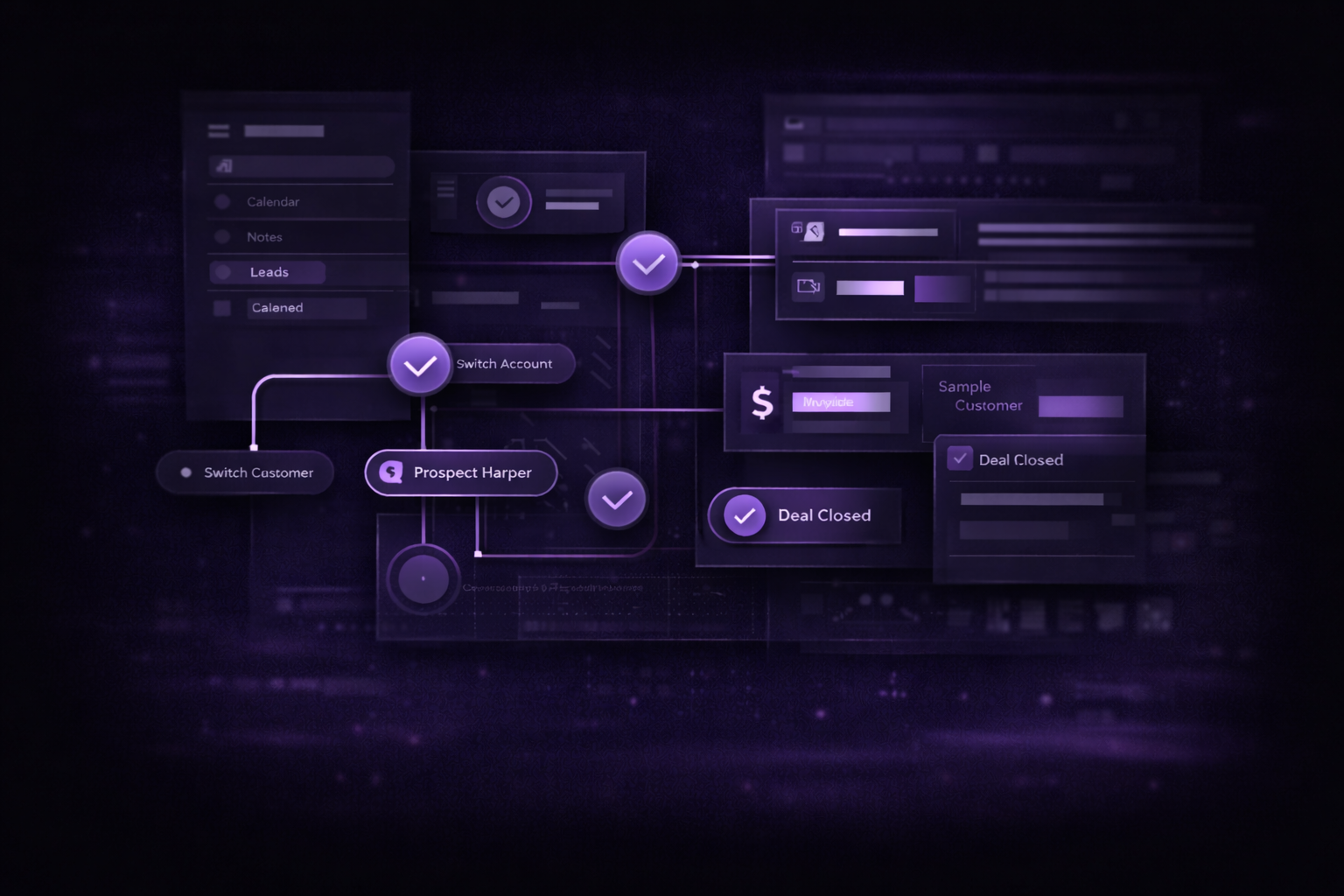
hero mockup

Overview

I led the UX design for a new enterprise sales enablement platform intended to replace an outdated, manual software system used during live sales conversations.

The existing process was cumbersome, error-prone, and difficult to use in real time. Sales representatives had to manually input data using unclear formulas, follow rigid page sequences, and ultimately generate a printed workbook to walk through with clients.

Our goal was to design a modern, flexible system that streamlined calculations, reduced cognitive load, and enabled a more natural, interactive sales conversation—while integrating with existing systems and supporting multiple user workflows.

The Problem

The legacy software introduced significant friction into the sales process:

  • Complex, unclear formulas that were difficult to understand and explain
  • Rigid page flows that didn’t match how sales conversations actually unfolded
  • Overwhelming screens dense with information
  • Manual printing and physical workbooks required to present results
  • Limited flexibility to adapt the flow to different client needs

These issues slowed down sales conversations, increased the risk of errors, and made it harder for sales teams to focus on the client.

The Solution

We designed a new, integrated software experience that:

  • Simplified formulas and calculations into clearer, more intuitive inputs
  • Allowed users to move through calculations in an order that made sense for their conversation
  • Automatically populated data from surveys and connected systems
  • Generated a live kickoff presentation that updated in real time
  • Supported a dual-screen setup, with independent controls for the salesperson and the client-facing presentation
  • Offered configuration options to adapt the experience for different use cases

The result was a more fluid, confident, and client-centric sales experience.

Results & Impact

Improved clarity and confidence around calculations and outputs

Provided flexibility to adapt presentations and workflows on the fly

Enabled sales teams to focus on dialogue rather than navigating software

Reduced friction during live sales conversations

Contraints & Consideration

  • Tight 3-month timeline from discovery to high-fidelity prototype
  • Legacy workflows deeply embedded in existing processes
  • Need to integrate with other internal systems and data sources
  • Multiple user roles interacting with the system in different ways
  • High visibility and business criticality of the sales process

These constraints required careful prioritization and close collaboration across teams.

Research & Discovery

Discovery began with foundational research to understand the existing process:

  • Whiteboarding sessions to map current workflows and pain points
  • Interviews with franchisees and individuals involved in the sales process
  • Feedback from stakeholders on what worked, what didn’t, and what was unnecessary
  • Analysis of how the printed workbook was used during sales conversations

This research revealed opportunities to remove unnecessary steps, simplify logic, and better align the system with real-world usage.

Key Insights

  • Sales conversations are non-linear and require flexibility
  • Overly rigid flows force users to work around the system
  • Simplifying calculations improves trust and confidence
  • Real-time visual feedback helps clients better understand outcomes
  • Reducing cognitive load allows sales teams to focus on relationships

Design & Exploration

The design process progressed through several stages:

  • Whiteboarding to explore alternate workflows and interaction models
  • Low-fidelity wireframes shared with stakeholders for early feedback
  • High-fidelity prototypes used to refine layout, hierarchy, and interaction details
  • Iteration based on feedback from PMs, stakeholders, and subject-matter experts

Design decisions emphasized clarity, flexibility, and progressive disclosure to prevent overwhelming users.

Development Collaboration

I worked closely with the PM and Dev Lead throughout the project to:

  • Align design decisions with technical constraints
  • Ensure feasibility of real-time data population and integrations
  • Define interaction patterns that could scale across configurations
  • Support development with detailed specs and walkthroughs

This collaboration helped ensure a smooth transition from design to build.

Validation & Exploration

Validation occurred through:

  • Stakeholder reviews of both low- and high-fidelity designs
  • Feedback from franchisees and users familiar with the legacy system
  • Iterative refinement of flows and calculations based on real usage scenarios

This iterative feedback loop helped refine the system before development.

Reflection

This project reinforced the importance of designing systems around how people actually work, not how processes are documented. By removing unnecessary rigidity and simplifying complex logic, the experience became more intuitive and adaptable.

Given more time, I would conduct moderated usability testing during live sales scenarios to further validate the experience and measure efficiency gains.

Thanks for reading!

View more projects